

A manager at a Klang Valley distribution firm put it to us plainly last month: "Everyone on my team uses ChatGPT or Claude every day. They tell me it saves them hours. So why didn't a single number on my quarterly report move?" It is the most honest question about AI at work in Malaysia right now, and the most common. The tools are in everyone's hands. The payoff is nowhere to be found. That disconnect is the first of the AI at work challenges we work through here.
That gap — between AI adoption and AI value — is the real story of 2026. And the data says it is not a technology problem. The biggest AI at work challenges Malaysian businesses face are organisational: how work is redesigned, how leaders set direction, and above all, whether people are actually trained. This article works through what the evidence shows and where the fixable levers are.
The tools aren't the problem anymore
For years the question was whether employees would use AI at all. That question is settled. In BCG's AI at Work 2026 report — a global survey of 11,749 people across more than a dozen markets — 74% of frontline employees now describe themselves as regular AI users, up 23 percentage points in a single year. BCG calls it the end of the "silicon ceiling": AI is no longer the preserve of technical teams. It is in marketing, HR, finance, and operations, and it is daily.
The time savings are real too. Among regular users, 42% of frontline staff report saving a full workday or more every week; for leaders the figure is 60% saving at least eight hours. The functions feeling it most are marketing, IT, HR, finance, and data analytics — exactly the white-collar work that fills a typical Malaysian SME or enterprise back office.
So if adoption is near-universal and the hours saved are genuine, why does the manager's quarterly report stay flat? Because saving time and creating value are not the same thing — and almost nothing in most organisations connects the two.
Challenge 1: The saved-time trap
Here is the finding that should stop every business owner. In the same survey, 66% of employees said they receive limited or no guidance on what to do with the time AI saves them. More than half admit they do not redirect that time into more strategic work.
Think about what that means in practice. A finance executive shaves ninety minutes off a report with Claude — and then spends those ninety minutes clearing email, or simply finishing earlier. The hours are real, but they evaporate. They never get pooled, never get pointed at the analysis that would actually change a decision, never show up on a P&L. The company bought a productivity gain and quietly threw it away.
This is the quiet tax on AI at work in Malaysia: thousands of small, uncaptured time savings spread across a team, none of them reinvested, none of them visible. The tool did its job. The organisation didn't.
Challenge 2: Deploying tools without redesigning the work
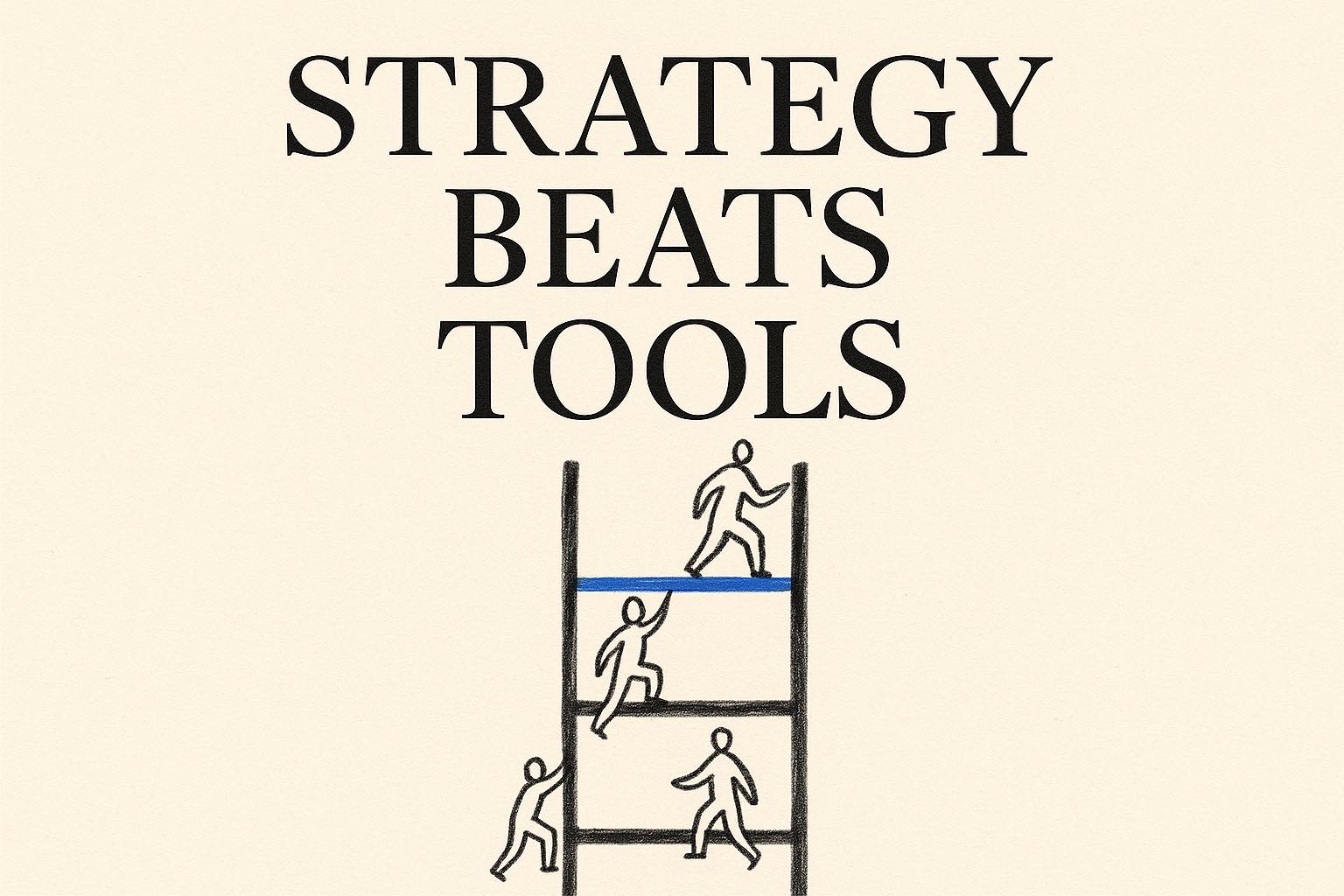
The second challenge explains the first. Most companies have treated AI as something you switch on, not something you build around. BCG describes a maturity ladder with three rungs — Deploy, Reshape, Invent:
- Deploy — give people the tools and hope productivity follows. This is where most Malaysian businesses sit.
- Reshape — redesign end-to-end workflows and processes around what AI now makes possible.
- Invent — build new products and business models on top of AI.
The companies that move past Deploy are the ones that pull ahead, and the gap is not subtle. Employees at Reshape or Invent organisations are far more likely to save a full day a week (53% versus 31% at Deploy-only firms), to find it easier to demonstrate measurable value, and even to enjoy their work more and trust leadership's direction. Initiatives that "invent" — reimagining how a function works rather than bolting AI onto it — have nearly doubled since 2025.
The lesson for a Malaysian business is uncomfortable but clear. Handing your team a Claude subscription and an instruction to "use AI" is the Deploy rung. It produces scattered time savings and not much else. The value lives one rung up, where someone has rethought how a process actually runs — and that takes intent, not just a licence.
Challenge 3: The training and leadership gap
If there is a single lever that separates the companies capturing value from the ones that aren't, it is people — and this is where the data is bluntest.
In the survey, 88% of respondents expect to need major upskilling within the next five years. Only 36% feel they have been properly trained — a number that has barely moved since 2025. The demand for AI skills is loud and persistent; the response still falls short. People are using tools they were never taught to use well, which is exactly how you get confident prompting and mediocre results.
Leadership is the other half. Only 33% of frontline employees say leadership communicates clearly about AI, and just 28% see real alignment between what leaders say about AI and what the organisation actually does. When the people doing the work don't know what "good" looks like and don't hear a clear direction from the top, you get precisely the pattern in Challenge 1: lots of activity, no strategy, no captured value.
Of the three challenges, this is the most fixable. You cannot redesign every workflow overnight, and you cannot force a market to mature. But you can train people properly and you can set a clear direction — and the evidence says those two moves unlock most of the rest. Companies that invested in a major reskilling initiative consistently showed double-digit advantages across value captured, trust, and employee confidence.
What this means for Malaysian businesses
Two things make the Malaysian picture distinct.
First, adoption here is not lagging — by some measures it is ahead. BCG's data puts India, the Middle East, and Australia at the front of frontline adoption, with mature Western markets like France, Italy, and the US trailing the average. Malaysian teams, in our experience working with SMEs and enterprises across Selangor and KL, look much more like the leaders than the laggards: people are already in the tools. The bottleneck is not willingness. It is the organisational layer above the tools — training, direction, and process.
Second, the usual excuse for not training — cost — barely applies in Malaysia. Through HRD Corp, registered employers who pay the monthly levy can apply that balance directly to course fees, which means structured AI training is effectively pre-funded for most companies. The "we can't afford to upskill" objection that drives the global 36%-trained figure is, for a Malaysian employer, largely a paperwork problem rather than a budget one. That is a genuine local advantage, and most businesses are leaving it on the table.
It is worth being honest about the limits of the data: BCG's survey is global, self-reported, and skewed toward larger firms, so the exact percentages won't map perfectly onto a 30-person business in Shah Alam. But the direction is unmistakable and it matches what we see on the ground — the constraint has moved from the tool to the team.
How to close the gap
Closing the AI at work value gap is not about buying better tools. It comes down to three moves, in order:
- Train people deliberately. Not a one-hour lunch-and-learn, but structured, role-specific training — what good prompting looks like for a finance analyst versus a marketer, how to check AI output, where it fails. This is the single highest-return lever, and in Malaysia it is largely HRD-Corp-claimable.
- Set a clear direction. Leadership has to say, out loud and specifically, what AI is for in this business this year, and what the time saved should be redirected toward. Ambiguity is what produces the saved-time trap.
- Redesign one workflow at a time. Pick a single end-to-end process — order handling, monthly reporting, customer response — and rebuild it around what AI now makes possible, rather than dropping AI into the old steps. Prove the value there, then move to the next.
For the deeper sequencing of an organisation-wide rollout, our AI adoption roadmap for Malaysian SMEs walks through the stages, and our Claude Managed Service and AI Solutions work covers the build side once the people and process are ready.
The first move, though, is almost always training — because it is the lever the data singles out, and the one Malaysian employers can fund most easily. Our HRD Corp-certified AI training is built exactly for this gap: practical, role-specific AI upskilling for Malaysian teams, claimable under the HRD Corp levy. As an HRD Corp approved AI training provider, we prepare the compliant quotation, course outline, and trainer profile, and help you apply for the grant in eTRiS before the course starts — so the cost objection genuinely disappears.
The manager with the flat quarterly report didn't have an AI problem. He had a training-and-direction problem wearing an AI costume. Fix that, and the hours your team is already saving finally start showing up where it counts.
References
- BCG — AI at Work 2026 (Artificial Intelligence): global survey (n=11,749) on AI adoption, value capture, training, and the Deploy/Reshape/Invent maturity ladder.
- HRD Corp: Malaysia's Human Resource Development Corporation — the levy scheme that makes employer training claimable.
- MDEC — Malaysia Digital: Malaysia's digital-economy agency, context for national AI and digital-skills adoption.
Figures from the BCG survey are global and self-reported and were accurate at the report's June 2026 publication; treat them as directional for any single Malaysian business.
免费咨询
Turn AI adoption into measurable value
Your team already uses AI. We help Malaysian businesses train them to use it well — practical, role-specific, HRD Corp-claimable AI upskilling that closes the value gap.
Explore our HRD Corp-certified AI training
Explore our AI Solutions
Read: AI at Work in Malaysia — what every company should do now