
AI Consulting · Malaysia & Singapore
You have the budget. You are not sure what to do with it.
That is the normal position, and it is not a knowledge problem. The hard part of adopting AI was never choosing a tool — it is picking the right process, changing how the work is actually done, and being able to prove afterwards that anything moved. We supply all four parts: the assessment, HRD Corp claimable training, the tools and platform, and the custom integration and AI applications. This page sets out what each stage takes in time, and which parts the levy will and will not cover.
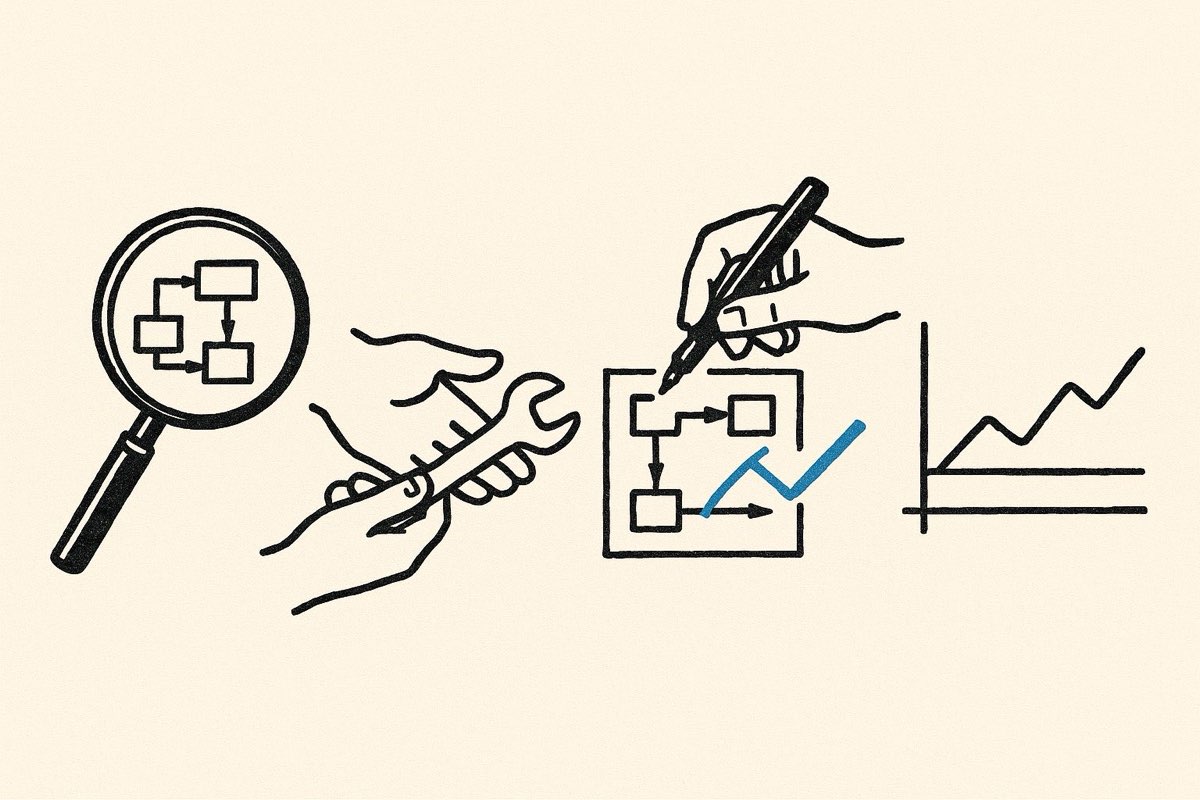
- 01
AI Awareness
Decide which process to change first
Two to three weeks
- 02
AI Tooling
Put working tools in front of the right people
Two to four weeks, timed to land with stage 3
- 03
Workflow Redesign
Rebuild the process, then build the automation into it
Four to twelve weeks, depending on how many systems it touches
- 04
Adoption & Measurement
Prove it moved, and keep it working
First read at 30 days, then ongoing
Why buying one piece does not work
A strategy firm hands you a roadmap and leaves. A training provider delivers a workshop against the levy and leaves. An agency builds something and leaves. Each is competent at its own stage, and each depends on a stage nobody was paid to do.
Capability without a redesigned process changes nothing. A redesigned process nobody can operate changes nothing either. The two failures look identical from outside and need opposite fixes.
We set the symptoms out in full in our diagnosis of stalled AI programmes, including the cases where the honest answer is that no further training will help.
What you get
The whole package, from one provider
Every provider on this market supplies one of these four. A strategy firm assesses. A training centre trains. An agency builds. Buying them separately means nobody is accountable for whether the work actually changed — which is the gap most AI budgets disappear into.
Assessment
What AI can realistically do here, which process to start with, and how that work should be redesigned — including the processes we tell you to leave alone. That judgement is the part a vendor selling a licence has no reason to give you.
Not claimable on its own
HRD Corp claimable training
We train the people who run the process, on that process, as an HRD Corp approved provider — and we file the grant and the claim rather than handing you a form. Anchor Academy runs the certification tracks behind it.
Claimable against the levy
Tools and platform
We select, provision and configure the model and platform, sized against your real volumes rather than a list price. Client work is delivered as custom agents on that platform, not as a packaged product you have to fit around.
Licences and usage, billed at cost
Custom integration and AI applications
Agents, integrations into the systems you already run, approval steps, and the exception handling that is most of the real work. Handed over with monitoring and ownership arranged — not a demo that stops when we leave.
Not claimable
What happens, in order
The four stages
Each stage names what changes in the work, not what gets installed.
- 01
AI Awareness
Decide which process to change first
“We have budget approved. Where do we point it?”
A shortlist of processes worth changing, and a first pick.
What changes in the work
You stop discussing AI in general and start pointing at named processes with volumes attached. The output is a spending decision, not a briefing.
- A working session with the people who do the work, not only those who sign for it
- Processes scored on volume, variance, and whether anyone already measures them
- The processes we tell you to leave alone, with reasons
- A baseline of your pick, taken before anything changes
Two to three weeks
Delivered as training this is HRD Corp claimable. The assessment itself is not.
- 02
AI Tooling
Put working tools in front of the right people
“Which model, on what plan, and who gets access?”
The team can use the tool on their own work, under rules you set.
What changes in the work
Training lands on the actual process, in the weeks it changes, so there is something to practise on. What may never be sent to a model is written down before rollout, not after an incident.
- Model and plan chosen, costed against your real volumes
- Training on the process being changed, not a general AI course
- Written rules: what data may be used, who approves, what is out of bounds
- Claude Certified Architects and Associates on the delivery team
Two to four weeks, timed to land with stage 3
HRD Corp claimable trainingThis is the stage the levy and the MyMahir deduction are built to fund.
- 03
Workflow Redesign
Rebuild the process, then build the automation into it
“We have the tool and people can use it. Why has nothing moved?”
A rewritten process with the automation built in. This is the 40% line below — the largest, and the one almost nobody sells.
What changes in the work
The documented process gets rewritten: which steps disappear, which need approval, and who owns the result. Skipping this is the most common reason a programme stalls.
- The new sequence written down, including the steps that disappear
- What the agent may do alone, and what needs sign-off
- The build: the agent, and the integrations into your systems
- Exception handling — most of the build, and where cheap quotes cut corners
- A named owner and the date the old path closes
Four to twelve weeks, depending on how many systems it touches
how we build agentsNot claimable. No Malaysian grant or levy scheme currently pays for redesign — budget for it separately.
- 04
Adoption & Measurement
Prove it moved, and keep it working
“How do I show my board this was worth the money?”
Numbers that answer whether it worked, and cover for when it drifts.
What changes in the work
The programme gets a number and a date before it starts, so whether it worked has an answer instead of an argument.
- An operating measure and a quality guard, agreed before rollout
- Adoption read at about a month, the operating measure at about three
- A stop rule — the result that would mean picking a different process
- Monitoring, an exception queue with a human on it, and named ownership
First read at 30 days, then ongoing
managed operations
Where the money goes
The four stages are a sequence. This is the budget.
Useful before you allocate anything, because the two lines most businesses fund are not the two that decide whether it works.
- 10%The model and the toolLicences and API usage. The part everyone shops for, and the smallest line on the page.
- 20%Data and plumbingThe build itself: getting the agent to your systems, the integrations, the credentials, the places your data actually lives. Delivered inside stage 3, but a separate line from the redesign.
- 30%CapabilityTraining the people who run the process. Claimable against the levy, which is why it usually does get bought.
- 40%Workflow redesignRebuilding how the work is done — stage 3 above. The largest line, funded by no grant, and sold by almost nobody.
The levy funds the 30. Vendors sell the 10. Almost nobody sells the 40 — and the 40 is the biggest line. That is a reasonable explanation for how an AI budget gets spent in full while the work stays exactly the same.
Our own split, set out by our founder in an essay on AI in Malaysian businesses. It adapts BCG's 10/20/70 principle for effort allocation, separating BCG's 70 into capability and redesign — because a business buys those two separately and usually buys only one. The 30/40 weighting is a judgement, not a measured figure, and we would rather say so. BCG’s article on the 10/20/70 principle.
What the levy covers, and what it does not
Training is HRD Corp claimable and we file the grant and the claim for you. The assessment, the redesign and the build are not — no Malaysian grant currently funds redesign. We put the stages on separate lines in the quotation so you can see which is which before you commit.
What this is built on
The stages are ours. They sit on two published frameworks we did not write.
Malaysia's AI Adoption Closed Loop
AI Malaysia Berhad (National AI Office)
The National AI Action Plan 2026–2030 treats adoption as a closed loop, not a linear rollout — ending in reinvestment for the next cycle. Our stage 4 exists because of that last step: a programme that never feeds anything back is a pilot that finished.
AI Malaysia (National AI Office)NIST AI Risk Management Framework 1.0
US National Institute of Standards and Technology
Four functions — govern, map, measure, manage. We use it for the governance and measurement side: what gets written down, what gets measured, who watches it afterwards. It is a risk framework, not an adoption one, so we use it for that and not as our delivery method.
NIST AI RMFWe reference these frameworks. Neither body endorses, certifies or is affiliated with Anchor Sprint.
Who is doing the work
Claude Partner Network
Certified in the Claude Partner Network, with Claude Certified Architects and Associates in house — evidence an engineer can design an agent deliberately rather than by trial and error.
HRD Corp approved
An HRD Corp approved training provider. We file the grant and the claim, and say up front which parts of an engagement the levy will not cover.
Malaysia and Singapore
Malaysia Digital status certified, engineering team in Shah Alam, Selangor, working across Malaysia and Singapore.
AI consulting in Malaysia — common questions
We start by picking the process, not the tool. That means a working session with the people who actually do the work, scoring candidate processes on volume, how much they vary, and whether anyone already measures them — then a baseline of whichever one you pick, taken before anything changes. Most businesses arrive having already chosen a tool and are surprised that the tool is the smallest decision in the programme. Choosing the wrong process is the expensive mistake, because everything after it inherits that choice.
We supply all four parts. The assessment of what AI can realistically do and how the work should be redesigned. HRD Corp claimable training for the people who run the process, with the grant application and claim filed by us. The tools and platform, selected, provisioned and configured against your real volumes — including our own products where one already does the job rather than building it again. And the custom integration and AI applications, built by Claude Certified Architects. Most providers in this market supply exactly one of those four, which means nobody is accountable for whether the work actually changed.
Four stages end to end: deciding which process to change, putting working tools in front of the people who run it, redesigning the workflow and building the automation into it, and measuring whether it moved. The redesign is the one most providers skip, and it is the largest share of the budget. Most providers sell one of those. A strategy firm stops after the first, a training provider delivers the second, an agency builds the third. Programmes stall in the gaps, because capability without a redesigned process changes nothing and a redesigned process nobody can operate changes nothing either.
Published ranges in this market are hard to compare, because they usually describe a short discovery exercise rather than a delivery engagement. We quote per stage instead of as a single number, for a practical reason: the stages are funded differently, and training is claimable while redesign is not. Tell us the process and roughly how often it runs and we will scope it with the stages on separate lines, so you can see what each part costs before you commit to any of it.
The training portion is, and as an HRD Corp approved provider we prepare the grant application and file the claim for you. The assessment, the workflow redesign and the build are not claimable. No Malaysian grant, levy scheme or tax deduction currently funds workflow redesign, which is why so many companies buy the training on its own and see nothing change. Budget 2026 adds a further 50% tax deduction for smaller companies on AI training recognised by MyMahir, once in two years, for applications up to the end of 2027 — again, training only.
Roughly a tenth on the model and the tool, a fifth on data and integration work, three tenths on building capability in the team, and four tenths on redesigning the workflow itself. The last of those is the largest line, it is funded by no grant, and it is sold by almost nobody — which is a reasonable explanation for why so many AI budgets are spent in full without the work changing. Treat the weighting as a considered judgement rather than a measured figure.
That is the most common way businesses arrive here, and it usually means capability was bought while the process stayed the same. The fix is not another course. Pick one process, write the new sequence of steps including the ones that disappear, name an owner, and set the date the old path closes. We published a five-symptom diagnosis for exactly this situation, including the cases where the honest answer is that no further training will help.
No. Most engagements start wherever the gap is. If you already know which process you want changed, we start at the redesign. If a workflow is live but nobody can say whether it worked, we start at measurement and baseline it from where it stands today. Stage one is the default only when nobody has yet agreed which process is worth changing, because that decision drives everything after it.
The stages have different natural lengths and compressing them into one another is a common mistake. Choosing the process takes two to three weeks. Tooling and training take two to four, deliberately timed to land with the redesign so there is something to practise on. The redesign and build run four to twelve weeks depending on how many systems the workflow touches. Measurement then runs on its own clock: adoption at about a month, the operating measure at about three, because output often dips before it lifts.
We are Certified in the Claude Partner Network with Claude Certified Architects and Associates in house, so depth on one model family is a deliberate choice rather than a constraint we inherited. Where a different model is the right answer for a specific task we will say so. The model is roughly a tenth of what makes an AI programme work; the other nine tenths are the stages on this page.
Our engineering team is in Shah Alam, Selangor, and we work with businesses across Malaysia and Singapore. We are Malaysia Digital status certified and an HRD Corp approved training provider.
Free consultation
Start with one process, not a transformation programme
Tell us the workflow that repeats and roughly how often it runs. We will tell you which stage you actually need, what it would take, and when the honest answer is that you do not need us yet.